
"robusta in espresso"
2000 article(s) found

A brief discussion on the extraction principle of Italian Coffee blending and Baking Espresso
A perfect Espresso is affected by many factors, let's talk about blending and baking first. 1, matching: a perfect Espresso starts with matching. The perfect Espresso requires sweetness, and the overall taste will be balanced, with a perfect balance of bitterness, acidity, sweetness and finish. This is a task that cannot be accomplished by a single coffee bean, so

About Vietnamese coffee
Vietnam, the second largest coffee producer in the world, is dominated by Robusta Robusta coffee. Vietnamese coffee can refer to coffee made in Vietnam, or it can be a method of making coffee. In terms of coffee produced in Vietnam, Robusta coffee has always been synonymous with low-grade coffee. Robusta coffee has far lower requirements for growth conditions than Arabica, and its disease resistance.
Boutique coffee is like Robusta that you don't know.
Arabica coffee beans are always classified as good, while its distant relative, Robusta, is often classified as bad. People always habitually look at things in dichotomy, good and bad, good and evil, good and bad. The same is true in the world of coffee. Arabica coffee beans are always classified as good ones.
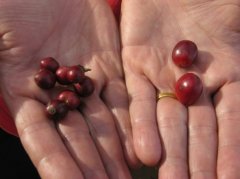
The knowledge of coffee beans you don't know, Robusta.
People always habitually look at things in dichotomy, good and bad, good and evil, good and bad. The same is true in the world of coffee. Arabica coffee beans are always classified as good, while its distant relative, Robusta, is often classified as bad. We might describe it this way, if Arabica is a gift from an angel.

How to drink robusta coffee powder after the name of robusta coffee
Following Cafe (Wechat official account vdailycom) found that Beautiful Cafe opened a small shop of its own. People used to look at things in dichotomy, good and bad, good and bad, good and bad. The same is true in the world of coffee. Arabica coffee beans are always classified in the good category, while its distant relative, Robusta, often grow coffee beans.
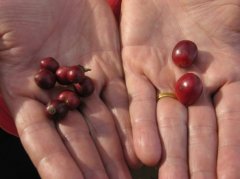
The common sense of boutique coffee beans Robusta that you don't know.
People always habitually look at things in dichotomy, good and bad, good and evil, good and bad. The same is true in the world of coffee. Arabica coffee beans are always classified as good, while its distant relative, Robusta, is often classified as bad. We might describe it this way, if Arabica is a gift from an angel.
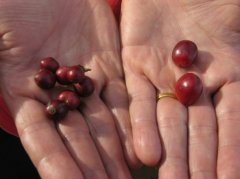
Boutique Coffee Common sense Robusta coffee beans you don't know
People always habitually look at things in dichotomy, good and bad, good and evil, good and bad. The same is true in the world of coffee. Arabica coffee beans are always classified as good, while its distant relative, Robusta, is often classified as bad. We might describe it this way, if Arabica is a gift from an angel.
The common sense of Robusta boutique coffee beans you don't know.
Arabica coffee beans are always classified as good, while its distant relative, Robusta, is often classified as bad. People always habitually look at things in dichotomy, good and bad, good and evil, good and bad. The same is true in the world of coffee. Arabica coffee beans are always classified as good ones.
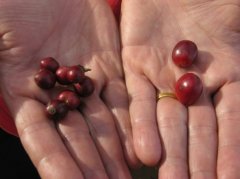
The common sense of Robusta coffee beans that you don't know
People always habitually look at things in dichotomy, good and bad, good and evil, good and bad. The same is true in the world of coffee. Arabica coffee beans are always classified as good, while its distant relative, Robusta, is often classified as bad. We might describe it this way, if Arabica is a gift from an angel.
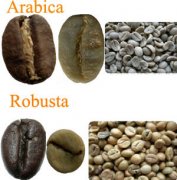
What do you not know about robsta robsta's notoriety?
People habitually treat things with dichotomies, good and bad, good and evil, good and bad... The same is true in the coffee world. Arabica coffee beans are always classified as good, and their distant relatives, Robusta coffee beans, tend to be classified as bad. We might say, if Arabica is a gift from angels

Which would you like to have latte beans? What's so unique about the coffee beans that must be deep-roasted with concentrated coffee?
With the advent of products such as single-origin and full-baked products, buying espresso beans is actually more complicated than in the past. Now Qianjie will tell you what you want to know about espresso beans. What's so unique about espresso beans? Most cafes use blended beans to make espresso, not just regular coffee, for several reasons:

How to tell the robusta coffee beans?
Following Cafe (official Wechat account vdailycom) found that robusta coffee, a small shop of its own, usually has a mediocre, rigid and pungent flavor, and because the vast majority of robusta in the world are planted in low altitude areas (author's note: as of May 2008, only Robbins with high altitude, high quality and washing treatment is rarely planted in India.

Introduction to the blending of Italian Coffee with different roasting degrees
The extraction method, such as hand-brewed coffee, which emphasizes the flavor of origin, usually uses medium-to-deep roasting for coffee beans, but for Espresso, non-re-roasting is not enough to reflect the perfection of Espresso taste. The baking degree of most Espresso beans is in the re-baking stage after the peak of the second explosion. On the one hand, the requirement of such baking degree comes from the extraction principle of Espresso, Espresso.

The overall taste will be balanced, pay attention to bitter, sour, sweet blend coffee
On the other hand, such roasting is also related to the birthplace of Espresso. Espresso is a coffee extraction method originating in Italy. At the end of the 19th century and the beginning of the 20th century, when Espresso was born, Italy was not a rich country in Europe. Limited by its own economic strength, Italy's popular coffee quality was not excellent, and most of them were inferior. Luo
Will Arabica beans be more expensive than Robusta in caffeine content?
Probably the most important difference? Something about the beans themselves, combined with everything else we've discussed, makes them very different in this field. Although people want to compare light and dark roasting to compare their caffeine content, what really matters is the coffee beans themselves. The coffee of this bean Arabica

What are the requirements for coffee beans to be paired and roasted, such as
On the other hand, such roasting is also related to the birthplace of Espresso. Espresso is a coffee extraction method originating in Italy. At the end of the 19th century and the beginning of the 20th century, when Espresso was born, Italy was not a rich country in Europe. Limited by its own economic strength, Italy's popular coffee quality was not excellent, and most of them were inferior. Luo
Boutique Coffee 10 kinds of common coffee drinks
The coffee on the market is mainly divided into two original species: Coffee Arabica and Coffee Robusta. Ten common coffee drinks on the market are mainly divided into two original species: Coffee Arabica and Coffee Robusta. 1. Black coffee (Black Coffee) Coffee made directly from coffee beans by ──, without milk

Robusta Coffee Flowers_Robusta Coffee Powder How to Brew_Robusta Coffee Bean Origin Introduction
Professional coffee knowledge exchange More coffee bean information Please pay attention to Coffee Workshop (Weixin Official Accounts cafe_style) Robusta coffee bean is one of the most important coffee varieties in the world. Robusta tree is suitable for growing in low altitude areas, especially at an altitude of 200300 meters. It has excellent resistance to high temperature tropical climate and its disease resistance.

Coffee knowledge Italian coffee blending introduction to blending and baking
Espresso requires a deeper baking degree that is different from other extraction methods. Baking can be divided into light baking, medium baking and deep baking. In addition to this simple classification, there is a more complex classification of SCAA baking, including shallow baking, medium baking, deep baking and re-baking. The extraction methods that emphasize the flavor of origin, such as hand-brewed coffee, are usually used.
About Robusta coffee beans
"Robusta" coffee, commonly known as "sturdy beans", can be grown at low elevations (200 to 800 meters above sea level), has strong resistance to diseases and insect pests, is not vulnerable to agricultural disasters, has a high annual output per unit area, and is harvested in large quantities by machine. in general, the cost of production is much lower than that of Arabica coffee.